
Quantitative Neuroimaging Platform
Transforming MRI scans into structured quantitative brain measurements for objective analysis and longitudinal monitoring of brain structure and health.
Why Quantitative Brain MRI Matters
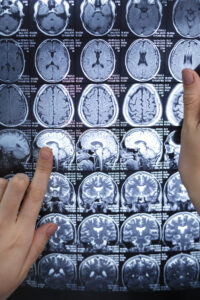
Brain MRI contains rich structural information, yet most clinical workflows still rely on qualitative interpretation. While research methods can extract measurements such as cortical thickness, regional volumes, and asymmetry, generating these metrics consistently across studies and clinical programs remains challenging.
Advances in neuroimaging now enable detailed anatomical measurements from standard MRI scans. However, reliable use requires reproducible processing, rigorous quality control, and population-relevant reference data without which inconsistencies can introduce systematic bias into brain measurements.
The Core Problem
NeuroHL builds infrastructure that converts raw MRI data into structured quantitative brain measurements for research, clinical, and longitudinal analysis – bridging the gap between methodological capability and practical deployment.
Neuro HarmoniX Labs enables a shift in brain MRI analysis:
Qualitative → Quantitative
Inconsistent → Reproducible
Ad Hoc → Structured
100+
Quantitative brain metrics per scan
Peer-reviewed
Methods grounded in published neuroimaging science
Structured
Outputs ready for clinical and research pipelines

What
We Do ?
What NeuroHL Does
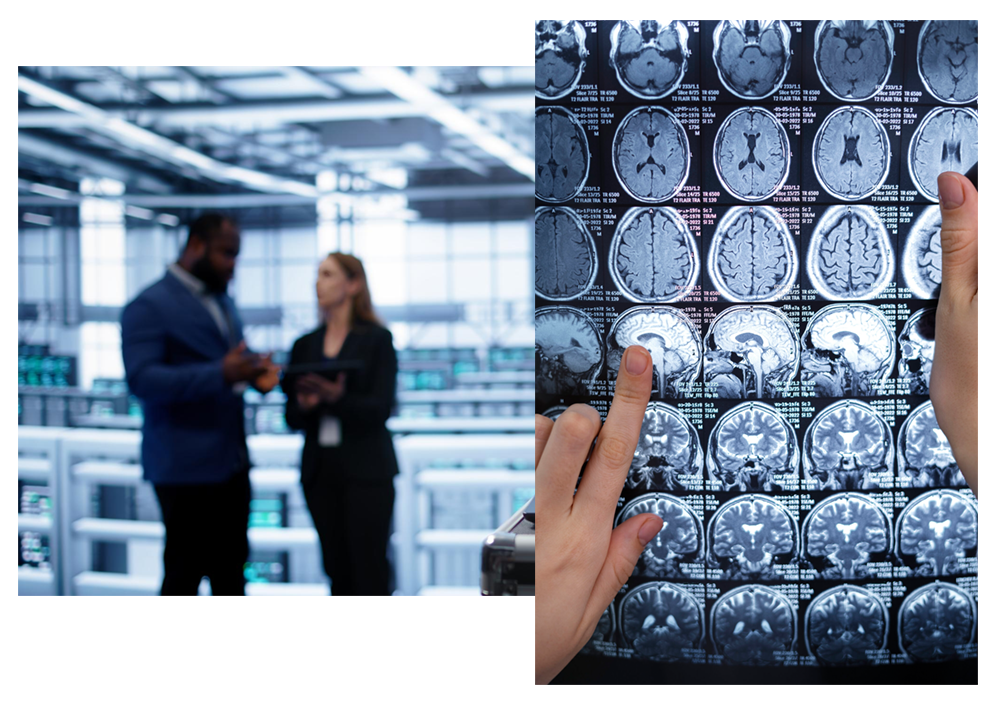
NeuroHL provides reproducible neuroimaging pipelines that extract quantitative measurements from standard MRI scans.
These measurements enable brain structure to be analyzed objectively and allow structural brain changes to be tracked across multiple imaging sessions.
The platform supports clinical research programs, neuroimaging laboratories, and clinicians evaluating structural brain changes associated with neurodegenerative conditions, where quantitative measurements can complement conventional MRI interpretation.
Where It Is Used ?
Research Applications
• Multi-site and longitudinal studies.
• Cohort-level statistical analysis.
• Publication- and grant-ready outputs.
Clinical Applications
- Memory and cognitive assessment programs
- Quantitative monitoring of disease progression
- Consistent analytics across diverse scanner environments
Our Scientific Principles
Reproducibility Before Speed
Identical MRI scans must produce stable, comparable results always.
NeuroHL prioritizes reproducible pipelines so quantitative brain measurements remain consistent across time, sites, and computational environments.
Population-Relevant Measurement
A brain measurement is only meaningful when compared against the right reference population.
NeuroHL grounds quantitative analysis in population-relevant norms to reduce bias and improve the interpretability of results.
Evidence Before Claims
We do not deploy methods that lack scientific validation.
NeuroHL is grounded in peer-reviewed neuroimaging research – traceable, documented, and open to scientific scrutiny.
Clinical Responsibility
Quantitative outputs support judgment, they do not replace it.
NeuroHL is designed to complement expert clinical interpretation, not substitute for it.
Who We Work With
Hospitals and Clinical Teams
Structured brain measurements that support diagnostic workflows reducing reliance on subjective visual interpretation and enabling consistent, data-driven assessment.
Neuroscience Researchers
Reproducible, peer-reviewed quantitative data for cohort studies, longitudinal analysis, and multi-site trials built to meet publication-grade methodological standards.
Drug Development Teams
Quantitative brain endpoints derived from neuroimaging supporting biomarker identification, trial monitoring, and regulatory-grade data documentation.